

Induction Coil Related Faults and Solutions
1. Water Leakage in The Induction Coil
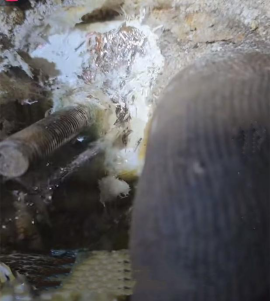
Water leakage in the induction coil can stem from several issues: insufficient tightening of hose clamps on new coils, loosening of hose clamps due to seasonal temperature fluctuations or physical damage such as cracks or punctures in the copper tubing itself.
How to resolve the water leakage in the induction coil ?
Implement a proactive maintenance schedule. For newly installed induction furnaces, ensure all hose clamps are re-tightened after the first operational shift. Before each subsequent induction furnace start-up, visually inspect all water pipes for any signs of leakage. Conduct a comprehensive inspection and re-tightening of all hose clamps during seasonal transitions.
2. Induction Coil Overheating
The induction coil overheating can be attributed to several factors: an insufficient supply of cooling water, a flow rate that falls below specified requirements, malfunctions in the sprayer or cooling fan systems, the accumulation of scale within the cooling coils, or the use of poor-quality cooling water.
How to resolve the induction coil overheating ?
Regularly verify the status of the cooling water supply to ensure adequate flow and pressure. Confirm that all sprayers and cooling fans are operating correctly and efficiently. To prevent scale buildup and maintain optimal cooling performance, it is highly recommended to use distilled or purified water in the inner cooling system.
3. Induction Coil Burn-through
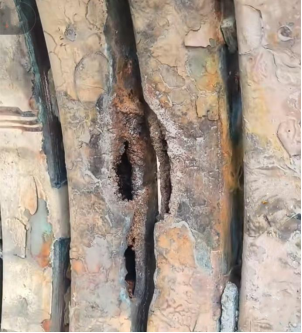
The induction coil burn-through is a very severe accident, which leads to water leakage of furnace body, damage the power cabinet and even lead to an explosion.
How to resolve the induction coil burn-through?
In the event of an induction coil burn-through, the damaged copper tubing must be professionally welded and repaired. Following the repair, a pressure test is mandatory to confirm its integrity. Subsequently, the induction coil requires a complete reapplication of insulation treatment, followed by the application of specialized induction coil grout and a thorough baking process to restore its electrical and thermal insulation properties.
4. Induction Coil Arcing
The induction coil arcing typically results from a reduction in the inter-turn insulation effectiveness (e.g., due to moisture, contamination, or damage) or poor electrical contact between the induction coil and the water-cooled ring or other conductive components.
How to resolve the induction coil arcing?
Conduct a thorough investigation to identify and eliminate all potential insulation hazards. Repair any areas of poor contact. After all repairs are completed, strictly adhere to insulation testing standards and procedures to ensure the system's electrical integrity and safety before resuming operation.